Why Floor Levelness Matters for Your Self-Build
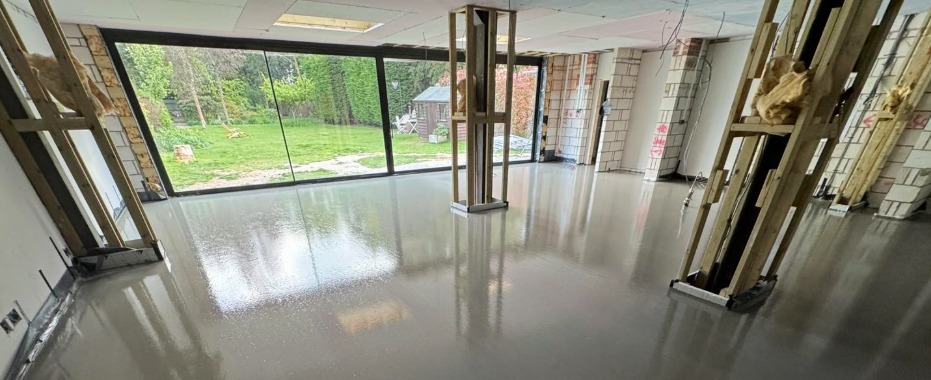
Surface Regularity, or ‘SR,’ is the industry’s way of grading the flatness of a floor. For self-builders, understanding SR1, SR2, and SR3 floor tolerances is important because they dictate how much a floor ‘waves’ or dips.
SR1 represents the highest level of precision, SR2 is the standard for most homes, and SR3 is for less demanding areas. By choosing the right SR class from the start, you avoid uneven floors or ‘bouncing’ floorboards later, ensuring your home’s foundation is structurally sound and visually level.
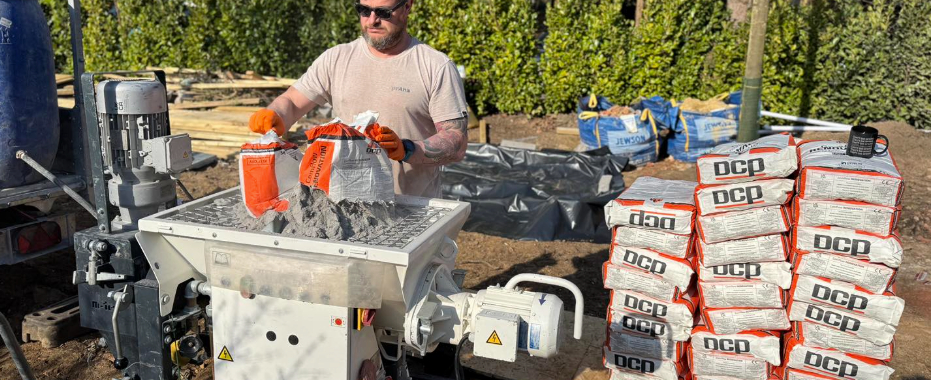
Based in London and serving the wider South East and Essex, Capital Screeding is your local expert in high-performance floor preparation. We specialise in liquid screeds and levelling compounds, helping self-builders achieve professional results every time. Our reputation is built on delivering exact tolerances, and we’re sharing our knowledge to help you make the right choices for your home.
Lasers and Straightedges – The Tools of the Screeding Trade
To guarantee the SR standards, we use a combination of laser levels and a 2-metre straightedge. While the laser ensures your entire floor is at the correct datum (height) across the room, the straightedge identifies the specific “SR” rating by measuring any gaps beneath it.
SR1 (High Category) – This is the precision standard. It allows for a maximum deviation of only 3mm over a distance of 2 metres. Using a laser level to set your heights and a straightedge to finish, SR1 is essential for thin floorings like resin or luxury vinyl tiles (LVT) where any ripple would be obvious.
SR2 (Normal Category) – The reliable industry standard for floors in homes. With a 5mm tolerance over a distance of 2 metres, this is perfect for most domestic applications, including carpets and standard wood flooring.
SR3 (Utility Category) – A 10mm allowance over a distance of 2 metres. This is best for functional spaces like garages where a basic level surface is sufficient.
The Cost of ‘Close Enough’ – Why SR Standards Matter
Your choice of floor covering will dictate the level of precision you need. Thin materials like Luxury Vinyl Tile (LVT) or resin are unforgiving – they will show up every tiny bump in the screed. We measure these bumps across a 2-metre span to ensure they stay within the strict SR1 or SR2 limits.
Without this kind of accuracy, the overall effect of expensive tiles can be ruined by ‘lippage’, where the edge of one tile sits higher than the one next to it. Using a professional screeder is your guarantee that your floor is a flat, beautiful feature in your home.

Which SR Rating Is Right for Your Home?
Always start by considering what’s going on top of the screed? It’s your final floor covering that proscribes which SR standard you should be working with.
Specify SR1 if you are installing high-gloss resins, thin Luxury Vinyl Tiles (LVT), or ultra-large format tiles. These finishes have zero ‘give,’ so the +/- 3mm precision of SR1 is essential to prevent visible ripples or lippage.
Specify SR2 for the majority of domestic projects in London. This +/- 5mm tolerance is the industry standard for engineered wood, ceramic tiles, and high-quality carpets.
Specify SR3 for utility spaces, such as garages or work rooms, where you might be using a simple floor paint or thick functional screed and perfection isn’t so important.
Floor Screeding FAQs For Self-Builders
This FAQ section answers the specific, hands-on questions we hear most regularly at Capital Screeding.
Yes, but indirectly. A floor that doesn’t meet its SR rating (for example, an SR3 surface where you actually needed SR1) often needs remedial work. This usually involves heavy coats of primer followed by a self-levelling compound to fill in the dips.
By ensuring we hit the right SR tolerance from the start, you’ll need exactly the amount of adhesive and primer recommended by your flooring manufacturer.
While we use laser levels during the installation to set the datum, the final Surface Regularity check should ideally happen once the screed is “walkable” – usually within 24 to 48 hours for liquid screeds.
It’s possible, but very difficult and time-consuming. Traditional screeds are laid by hand and depend entirely on the skill of the installer. Liquid screeds and advanced levelling compounds, which we specialise in at Capital Screeding, makes achieving a strict SR1 tolerance far more consistent and reliable.
If a section of your floor exceeds the allowed deviation it will need to be corrected before the final floor is laid. This is usually done by grinding down “high spots” or filling ‘low spots’ with a high-quality levelling compound.
Why Precision is Important to Long-Lasting Floors
A flawless flooring finish begins with the screed. By matching your flooring choice to the correct SR standard, you avoid structural failure and flooring flaws. A flat, stable floor adds value to your property and provides the basis for your interior design.
Ready to start screeding?
Contact Capital Screeding today for expert liquid screed installation in London and the South East. Our specialists ensure your floor is perfectly level – 020 3369 3396